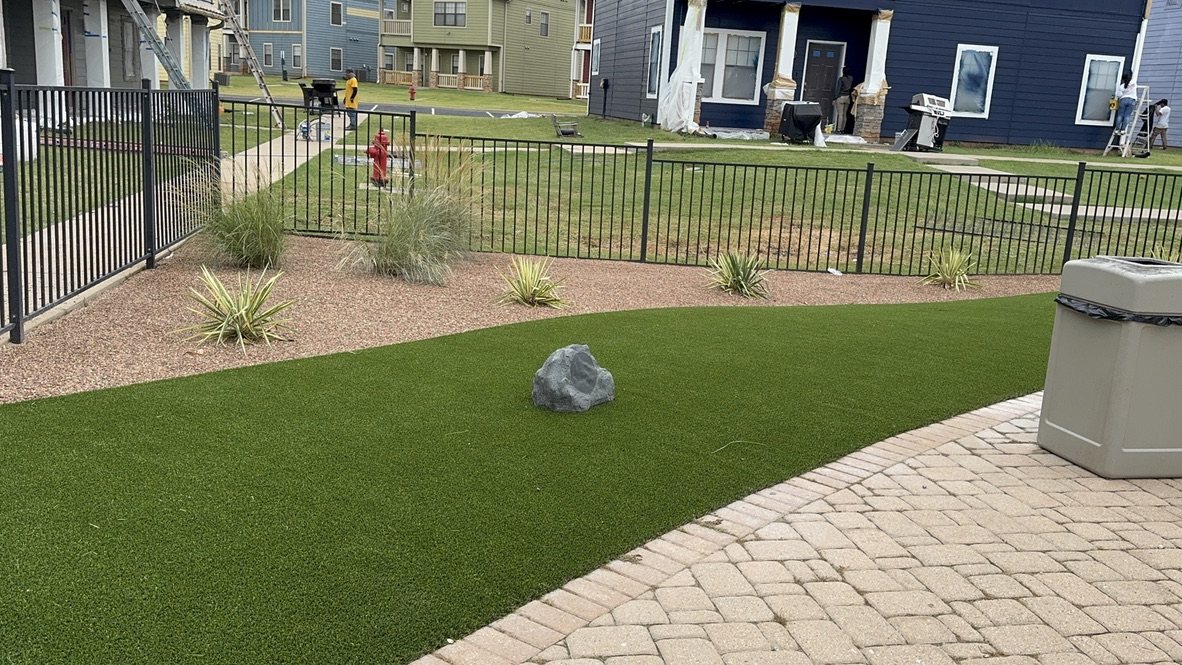
Artificial turf beside curved pavers, rock beds and black metal fencing at Cottage Row.
Photo by Advanced Turf Services• © Advanced Turf Services
Artificial Turf vs. Natural Grass: Cost Analysis
Compare the real cost factors for artificial turf and natural grass in Stillwater, including site preparation, drainage, maintenance, heat and long-term use.
Artificial turf and natural grass have very different cost patterns. Artificial turf requires a larger upfront investment, while natural grass spreads much of its cost across watering, mowing, fertilizer, repairs, and seasonal care. The better choice for a Stillwater property depends on how the space will be used and what conditions exist before installation.
What affects artificial turf cost?
A responsible estimate includes more than the turf roll. Cost can change with:
- Removal and disposal of the existing surface
- Excavation depth and access for equipment
- Base material and compaction
- Drainage correction
- Edge restraint and transitions
- The number and shape of seams
- Turf product, infill, and intended use
- Fencing, beds, concrete, or other work tied to the project
A small, difficult area can cost more per square foot than a larger open area. Pet areas and commercial spaces may also need different drainage and cleaning considerations.
What affects natural-grass cost?
Existing irrigation and healthy soil can make natural grass more economical. Deep shade, concentrated pet use, chronic mud, or difficult access can make it harder to maintain.
Compare long-term ownership, not just installation
For artificial turf, plan for periodic debris removal, brushing, pet-waste cleaning where applicable, infill adjustment, repairs, and eventual replacement. Product quality, installation, sun exposure, traffic, and maintenance all affect service life.
For natural grass, ongoing cost depends on lawn size, water use, mowing frequency, the desired appearance, and the number of treatments or repairs. A homeowner who handles maintenance personally has a different cost profile from a commercial property that needs dependable scheduled service.
Heat, drainage, and use matter
Synthetic turf can become hotter than natural grass in direct sun. Shade and the way people or pets will use the area should be considered before selection.
Drainage must be planned for either surface. Artificial turf does not solve an underlying grading problem by itself, and natural grass may decline where water repeatedly stands. Evaluate drainage before comparing finish materials.
When artificial turf often makes sense
Artificial turf can be a strong option for heavily used common areas, pet spaces, narrow side yards, and locations where mud or repeated wear is the main problem. Advanced Turf Services completed an artificial-turf and common-area upgrade at Cottage Row in Stillwater, providing a local example of this type of application.
When natural grass often makes sense
Natural turf may be preferable where a cooler living surface, a lower initial cost, or a traditional lawn is the priority and the site receives enough light. Sod, seed, and ongoing lawn care can each be considered based on timing and site conditions.
The only reliable comparison is a site-specific one. Review our Stillwater artificial turf service, sod installation, and lawn care options, then request an estimate for the alternatives that fit your property.
Planning an Outdoor Project?
Get a free estimate for your property in Stillwater, OK
Get Free EstimateRelated Articles
Pet-Friendly Artificial Turf for Your Yard
Compare artificial turf for Stillwater pet areas, including drainage, summer heat, cleaning, and maintenance.
Artificial Turf in Oklahoma Heat: Benefits & Tradeoffs
Considering artificial turf in Stillwater? Compare summer heat, maintenance, water use and drainage before choosing a surface.
Benefits of Artificial Turf in Hot Climates
Compare artificial turf's mowing and water-use benefits with heat, drainage, cleaning and replacement considerations for Stillwater properties.