
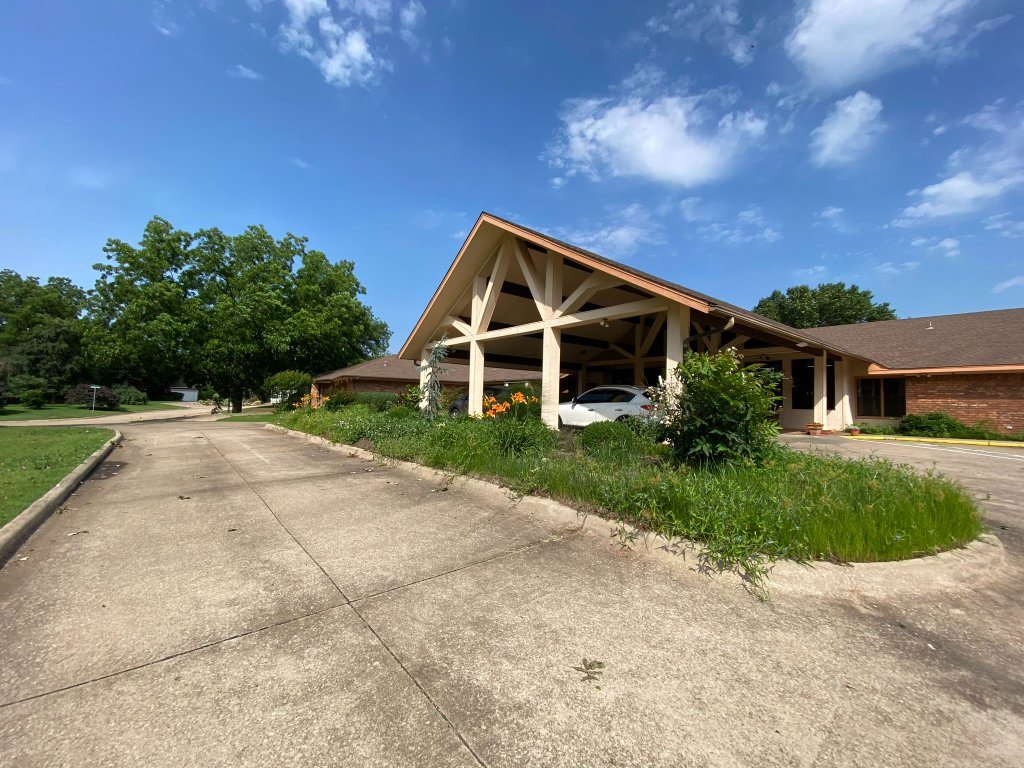
Christian Villa entrance and planting beds before landscape renovation.
Photo by Advanced Turf Services• © Advanced Turf Services
Drought-Resistant Landscaping in Stillwater
Plan a drought-conscious Stillwater landscape with better drainage, soil preparation, efficient irrigation, practical plant zones, mulch and lower-maintenance lawn areas.
Stillwater landscapes have to handle summer heat, windy dry spells, sudden downpours, and clay-heavy soil. Drought-resistant landscaping does not mean covering the yard with rock or giving up on color. It means matching plants, grading, irrigation, and surface materials to the way water actually moves through your property.
Start with the site, not the plant list
Watch the property after a hard rain and again during a dry week. Note where water stands, where runoff cuts through beds, which areas receive full afternoon sun, and where reflected heat comes off concrete or a south-facing wall. Those conditions should guide the design.
A bed that stays wet after storms needs a different solution than a sunny slope that dries within hours. If drainage is the main problem, correct it before adding plants. Our Stillwater drainage services can address grading, collection points, and water movement when the site needs more than a planting change.
Improve soil without creating a bathtub
Stillwater soil can be dense and slow to drain. Adding a small pocket of loose soil inside surrounding clay can trap water around roots, so bed preparation should cover the planting area rather than only each hole. Organic matter, appropriate grading, and a practical maintenance plan help roots establish more evenly.
A soil test can also prevent unnecessary fertilizer or amendments. Our soil testing service helps identify the starting conditions before a landscape plan is finalized.
Group plants by water needs
Place plants with similar water needs together. This lets one irrigation zone serve the plants that need it without overwatering drought-tolerant areas. Use the most water-demanding plants in smaller, high-visibility spaces near entries or patios, then use tougher plantings in larger perimeter beds.
Choose plants for the actual sun, soil, mature size, and exposure of the location. “Drought tolerant” still requires regular watering while roots establish. Once established, a well-matched planting generally needs less intervention than a plant fighting the site.
Use mulch and rock where each works best
A consistent mulch layer helps moderate soil temperature, slow moisture loss, and reduce weed pressure. Keep mulch away from trunks and plant crowns, and refresh it based on condition rather than piling on a new layer every year. Learn more about mulching in Stillwater.
Decorative rock can work well in drainage paths, narrow utility areas, and some low-water designs. It also stores heat, so it is not automatically the best choice around every plant or beside west-facing walls. The right mix of mulch, rock, plants, and hardscape depends on the exposure.
Make irrigation efficient and easy to maintain
Check sprinkler coverage before assuming a dry area needs more runtime. A clogged nozzle, poor overlap, or mixed plant needs can waste water while leaving part of the landscape stressed. Drip irrigation can be useful in defined beds when it is designed for the plant layout and inspected regularly.
Watering should respond to weather and soil moisture, not just the calendar. Deep, appropriate watering encourages stronger rooting, while frequent shallow watering can keep roots close to the surface.
Reduce high-maintenance lawn areas strategically
Keep natural turf where it serves a purpose—play, pets, recreation, or a strong visual frame. Convert awkward strips, steep slopes, heavily shaded corners, or spaces that are difficult to irrigate into beds, groundcover, hardscape, or another suitable surface. This reduces maintenance without making the property feel bare.
For a low-maintenance green surface in a suitable area, artificial turf installation in Stillwater may also be worth comparing with natural grass.
Build the project in the right order
A durable landscape usually follows this sequence:
- Correct drainage and grading problems.
- Define beds, access routes, and hardscape.
- Improve soil where needed.
- Install irrigation or adjust coverage.
- Place plants according to mature size and water needs.
- Finish with mulch or rock.
- Set an establishment and maintenance schedule.
Advanced Turf Services has completed landscape improvements at Stillwater properties including Stillwater Christian Villa and a local Airbnb renovation. Request a landscaping estimate to plan a drought-conscious design for your property.
Planning an Outdoor Project?
Get a free estimate for your property in Stillwater, OK
Get Free EstimateRelated Articles
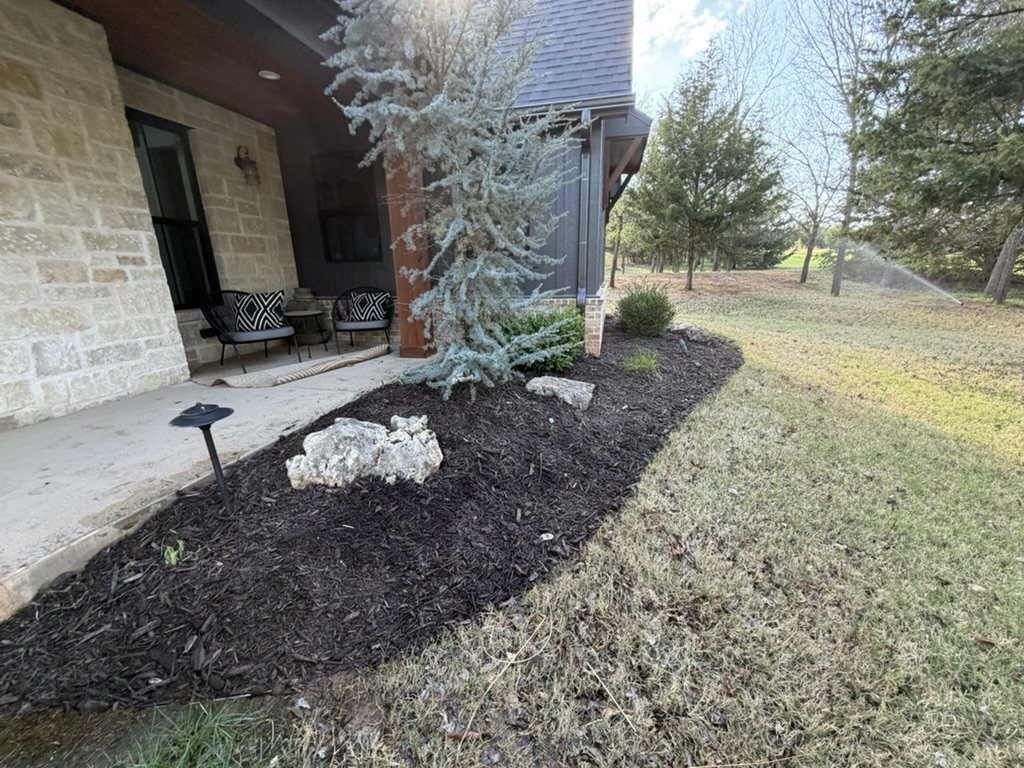
Planning a Landscaping or Property Cleanup Project in Stillwater
Plan your Stillwater landscaping or cleanup estimate with photos, priorities, access and timing. Explore aeration, overseeding and sod for lawn improvements.
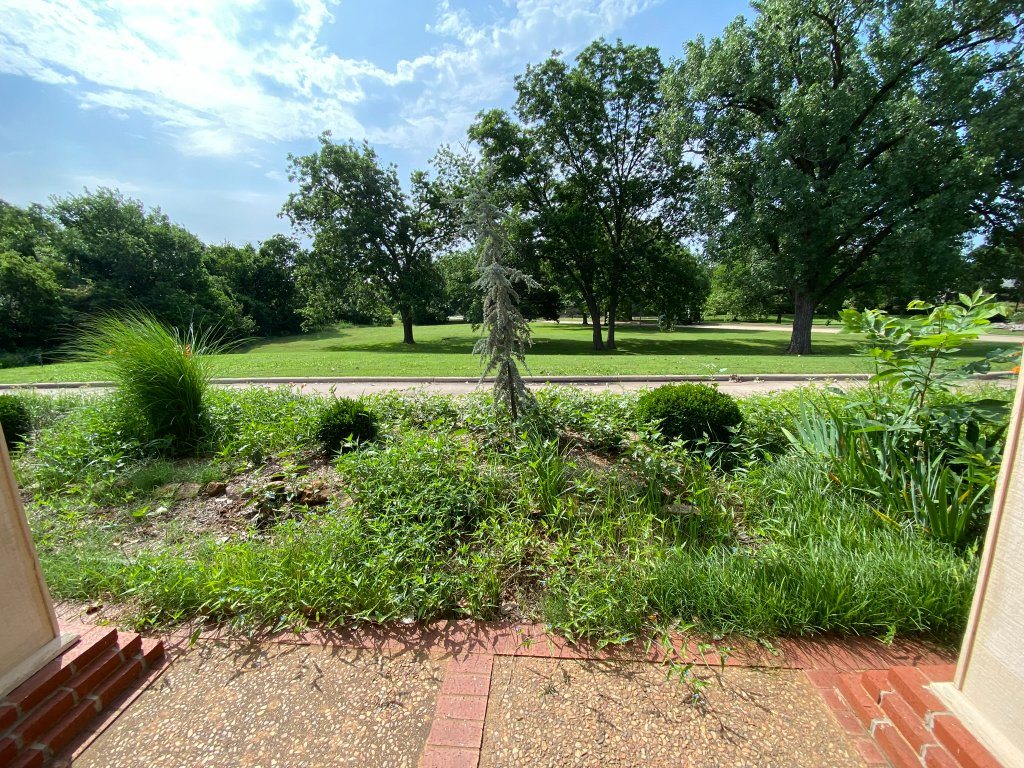
When to Trim Bushes & Hedges in Stillwater
Discover the optimal times to trim bushes and hedges in Stillwater, OK, ensuring healthy growth and vibrant landscapes.
Mulch vs. Rock Landscaping: Pros & Cons
Explore the benefits and drawbacks of mulch and rock landscaping in Stillwater, OK, to make an informed choice for your yard.