
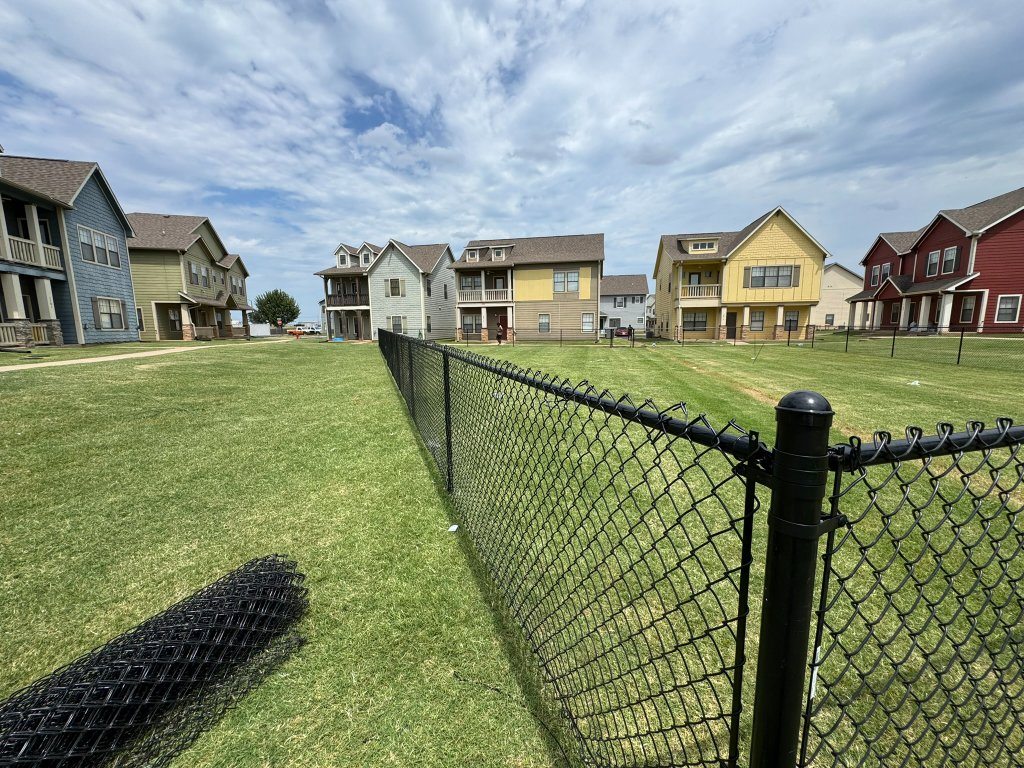
Mowed natural-grass lawn and black chain-link fence beside community homes. Context photo of natural grass; it does not identify or diagnose the condition discussed in this article.
Photo by Advanced Turf Services• © Advanced Turf Services
Why Crabgrass Keeps Returning in Stillwater Lawns
A follow-up checklist for recurring crabgrass: identify the weed, review treatments and fix the conditions that keep grass thin.
Crabgrass returning after treatment does not always mean the product failed. It can reflect a missed prevention window, new germination, a product that does not fit the grass or weed, or thin turf that still has the original problem. This guide helps Stillwater homeowners prepare useful information before another application.
Confirm the Weed First
Crabgrass, dallisgrass and nutsedge require different decisions. Photograph the whole plant, its base and any seedhead; a picture of a recently mowed patch may not identify it. For the general prevention approach, start with our crabgrass control guide.
Review What Was Applied
Keep the product name, application date, treated area and weather notes. A pre-emergent is aimed at establishment from seed; it does not remove every emerged plant. A post-emergent must be labeled for the identified weed and the lawn's grass species.
Do not select another product from an active-ingredient list alone. Follow the current label for rates, intervals, application conditions, watering, seeding and reentry. Two products with similar marketing names can have different instructions.
Check Why the Lawn Remains Thin
- Mowing: Compare the height with your species and cultivar. A tall-fescue setting is not automatically suitable for Bermuda.
- Moisture: Check coverage, rainfall and soil before increasing irrigation. Newly seeded areas need different care from established grass.
- Traffic and compaction: Assess repeated wear before ordering aeration.
- Shade: Adding fertilizer does not create more sunlight.
- Nutrition: Use grass needs and soil-test results to plan fertilization.
Coordinate Repairs With Weed Control
Tall-fescue overseeding, seeding a suitable Bermuda variety and installing sod are different repair methods. Choose the method that fits the existing grass and growing season. Recent herbicides may affect when seeding or other establishment can proceed.
Before spending on seed, tell the provider which treatments were used and when. See overseeding and sod installation for the options we assess.
What to Send With Your Estimate Request
Include a full-yard photo, a close-up of the weed, the approximate affected area, recent treatment details and whether irrigation is available. Mention whether the problem returns in the same location or appears in new areas.
Advanced Turf Services can assess weed control in Stillwater alongside the maintenance issues that leave room for weeds. Request an estimate for a plan based on your lawn rather than another automatic application.
For background, see OSU Extension's guide to weeds in home lawns. Current product directions govern any treatment.
Planning an Outdoor Project?
Get a free estimate for your property in Stillwater, OK
Get Free EstimateRelated Articles
Why Is My Lawn Turning Brown During This Heatwave?
Brown lawn in Stillwater? Check moisture, mowing, irrigation and damage patterns before treating. Learn when to seek a lawn assessment.
Top 7 Tips for a Healthy Lawn in Stillwater
Discover the top 7 expert tips for a lush, healthy lawn in Stillwater, OK. From soil testing to seasonal care, learn how to beat the Oklahoma heat.
How Much Does Lawn Care Cost in Stillwater, Oklahoma?
Wondering about lawn care costs in Stillwater, OK? Learn what factors influence pricing and how to budget for a healthy, vibrant lawn in Payne County.